
'SUV is a very intensely fought category, unlike hatchbacks and cars.'

Maruti will showcase its first concept electric vehicle, the e-SURVIVOR; M&M it's six new EVs, including two futuristic concepts

Passenger vehicle sales in India touched a record high of 41.08 lakh units in 2023, growing by 8.3 per cent over the previous year driven by SUVs, which accounted for almost half of the total dispatches from manufacturers to dealers. The record sales have been achieved despite an increase in the average price of vehicles to Rs 11.5 lakh last year as compared to Rs 10.58 lakh in 2022. Market leader Maruti Suzuki, Hyundai Motor India, Tata Motors and Toyota Kirloskar Motor reported their best-ever annual sales in 2023.

India will not tailor its policies to suit US EV maker Tesla, and its laws and tariff rules will be formulated to attract all-electric vehicle manufacturers from across the world to set up a base in the world's fastest-growing economy, Commerce and Industry Minister Piyush Goyal said. Tesla has been seeking an initial tariff concession that would allow it to offset 70 per cent customs duty for cars priced less than $40,000, and 100 per cent for cars of higher value.
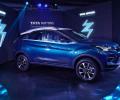
After clocking losses for seven straight quarters, Tata Motors on Wednesday posted a consolidated net profit of Rs 3,043 crore in the third quarter (Q3) of 2022-23. This came on the back of a strong order book, better semiconductor chip supply, tempered commodity prices, and a better product mix. "We remain cautiously optimistic about the demand situation, notwithstanding the global uncertainty.

By 2025, Uber projects that 25,000-30,000 cars -- or 12 to 16 per cent of vehicle additions -- would be EVs, reports Surajeet Das Gupta.

The electric vehicle evolution in India's passenger vehicle market has remained frozen in time and may see limited adoption over the next decade, experts say.

Even as India's passenger-vehicle sales touched a record high of 3.9 million units in 2022-23, growing 27 per cent over the previous financial year, the country's largest carmaker, Maruti Suzuki India (MSIL), said on Monday uncertainties in the electronic-component supplies might affect production in FY24. MSIL said the shortage of electronic components had some impact on production in FY23. "The company took all possible measures to minimise the impact.
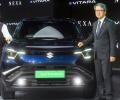
Tata Motors is the leader in the electric car market with about 62 per cent share.
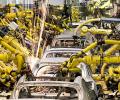
The sharp increase in commodity prices on account of the Russia-Ukraine war has put automakers in a fix. After the frequent price hikes in the current fiscal, manufacturers fear that any more price increases may further dent the already weak demand in certain segments. "We have taken several hikes and cannot immediately do it again. "We will have to closely watch the situation and act accordingly," said an official at an auto firm, declining to be identified. Even for companies like Tata Motors Passenger Vehicles, which has had a strong volume run and a robust order book, passing on the entire costs has been tough.

India will have 30 per cent of its two-wheeler industry turning electric by 2030 as new manufacturers lead the shift, said a report on Monday. Passenger vehicles will be 15 per cent electric and the three-wheeler segment 75 per cent electric by 2030, said the report by BNP Paribas called 'India Autos-Electric vehicles: Minutes to midnight'. "We see FY22 as the year of inflection for the two-wheeler EV industry, with an accelerated EV adoption helped by incentives, wider availability, model launches, rise in crude prices and improved general awareness. We see 30 per cent of the 2W industry turning electric by 2030; the pace of incentive withdrawal presents an upside/downside risk," the report (India Autos - Electric vehicles: Minutes to midnight) said.

For the first time, the event will take place across three locations in Delhi: Bharat Mandapam at Pragati Maidan, Yashobhoomi Convention Centre at Dwarka, and India Expo Mart at Greater Noida.

An unhappy, restive mood prevails at the Ford factory Maraimala Nagar, 50 km from Chennai, and the surrounding area. The security is tight - not just Ford security personnel but also Tamil Nadu state police who are posted at the main gate. From September 9, when Ford India announced it was phasing out its units in India and leaving, workers at its manufacturing unit at Maraimala Nagar have held onto one hope: that the state government will step in to save their jobs.

Chinese electric carmaker BYD is focusing on launching vehicles in the Rs 25-45 lakh price range in India even as it continues to evaluate customer preferences and demand in more affordable segments, its Head of Electric Passenger Vehicles in India Rajeev Chauhan told Business Standard.
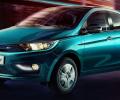
Tata Motors on Wednesday unveiled Tigor EV, its second electric model in the personal mobility space after Nexon EV. The auto major has tasted success with Nexon EV, which currently commands about 70 per cent market share in the domestic electric vehicle segment. The Tigor EV comes powered by the company's high voltage electric architecture - Ziptron - and has been developed based on three pillars of technology, comfort and safety.

Almost all of these companies either unveiled their new electric vehicle or alternative energy-powered models.

The demand for buses largely remained robust in 2023, driven by the increasing need for public mobility and replacement. Ashok Leyland Limited (ALL) recorded a 64 per cent year-on-year increase in sales of medium and heavy commercial vehicle (MHCV) buses during the April-to-December period of 2023 to 11,216 units. Volvo Eicher Commercial Vehicles (VECV) posted 24.7 per cent sales growth between April and December for light and medium-duty buses, and 36.9 per cent growth for heavy-duty buses.
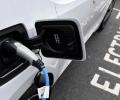
Proliferation of home chargers of around 7 KWh and above, which take six to seven hours to fully charge a car depending on the model, bring running costs down by a third or so. That, coupled with the increasing range of modern electric cars, can lead to a massive increase in sales.

Auto Expo 2023 may not trigger a fresh rally in automobile stocks, say analysts, as this year's edition lacks participation from major listed players. It is also owing to the focus on electric vehicles (EVs), a segment where four-wheelers have minuscule market share. "In the passenger vehicles (PV) segment, Maruti Suzuki India and Tata Motors are the only listed players.
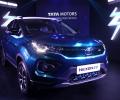
Tata Motors plans to have 10 new battery electric vehicles (BEVs) in its domestic product portfolio by 2025 as it looks to drive its business model towards sustainable mobility going ahead, as per Tata Motors chairman N Chandrasekaran. In his message to the shareholders, he noted that the auto major aims to be amongst the world leaders in sustainable mobility solutions and as part of that it is also exploring tie-ups in cell and battery manufacturing to secure supplies for its portfolio of green vehicles. "In India, EV penetration in our portfolio has now doubled to 2 per cent this year and we expect penetration to increase exponentially in the coming years. "Tata Motors will lead this change in the Indian market. By 2025, Tata Motors will have 10 new BEV vehicles and as a Group, we will invest proactively to set up charging infrastructure across the country," Chandrasekaran informed shareholders in the company's Annual Report for 2020-21.

Auto manufacturers have focused on launching CNG variants of their popular models to meet consumer demand for vehicles with lower running costs.

Besides electric vehicles, some start-ups present are working in the area of bike customisation, motorsports, auto gaming arena, autonomous vehicle and so on
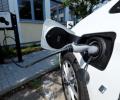
Tata Motors is planning to invest Rs 15,000 crore in the EV segment in the next five years, a top company official has said. The company, which is a leader in the newly emerging EV segment with offerings such as Nexon, is also planning to develop around 10 more new offerings in the segment, president for Passenger Vehicles Business of Tata Motors Shailesh Chandra said. "As far as future is concerned, in next five (years) we will invest Rs 15,000 crore in electrification.

'The favourable rupee-dollar exchange rate, there are opportunities we can tap.'

The global semiconductor shortage hit passenger vehicle sales in September, with major manufacturers like Maruti Suzuki, Hyundai and Mahindra & Mahindra reporting a decline in sales on Friday. Kia India and Honda Cars also reported a dip in wholesales last month as compared with the year-ago period. Carmakers like Tata Motors, Toyota Kirloskar Motor, Nissan and Skoda, however, reported an increase in passenger vehicle dispatches last month despite supply chain issues.

Maruti Suzuki, Hyundai and Tata Motors reported their highest-ever dispatches to dealers last fiscal, enabling the domestic passenger vehicle industry to log in best-ever performance to date. The country's largest carmaker Maruti Suzuki India reported its highest wholesales to date at 19,66,164 units, up 19 per cent from 16,52,653 units in 2021-22. Its domestic dispatches rose to 17,06,831 units in 2022-23, up 21 per cent from 14,14,277 units in 2021-22 fiscal.Hyundai Motor India said its overall wholesales last fiscal were the highest ever since commencing operations in the country.
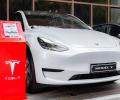
With India's EV penetration at just 2.5 per cent, the market presents an opportunity -- provided Tesla gets its pricing right.

A single application and a plethora of services for passenger cars - that is what myTVS, a brand that operates under Ki Mobility Solutions and is part of the TVS family, is set to bring to customers, in a bid to disrupt the concept of "super apps" in India. Starting July 15, myTVS will launch its connected car platform or super app called myTVS Life360 for aftermarket passenger cars. Through it, customers will be able to avail themselves of a range of services like maintenance, diagnostics, roadside assistance, accessories, payments, insurance, and so on.

Both are finding it difficult to sell one each of their plants -- Chennai Maraimalai Nagar (Ford) and Talegaon near Pune (GM) -- and are finding the road blocked by employee severance snarl-ups, report Sohini Das and Shine Jacob.

The all-new ZS EV will be available in two variants -- Excite and Exclusive, priced at Rs 21.99 lakh and Rs 25.88 lakh, respectively. The company said it has initiated bookings for the Exclusive variant, while bookings for the Excite trim will commence from July 2022. The model comes with the largest in-segment 50.3-kWh (kilowatt-hour) battery with advanced technology, offering a 461-km certified range in a single charge.

According to research by IHS Markit, for an ecosystem still grappling with infrastructure issues -- the high cost of EVs and a greater OEM (original equipment manufacturer) focus on electrifying two-wheelers and commercial vehicles first -- the share of such vehicles is expected to be 4 per cent by 2030, reports Pavan Lall.
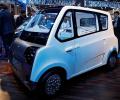
The EV industry is at an inflection point and batteries will play a critical role ahead -- batteries and related components typically constitute 35-45 per cent of an EV's costs.

Joint crack team of Maruti, Tata Motors, M&M to develop hybrid cars in India

From setting up cutting-edge facilities to cater to the domestic market and building capabilities of global standards, the action is building up.

Among the cars unveiled at the Auto Expo on Wednesday was Mahindra and Mahindra's e-KUV for Rs 8.2 lakhs ex-showroom Delhi. With a single charge range of 150 km and a 55 min fast charging upto 80 pc, it was both a head-turner and a conversation-starter.

American tech billionaire Elon Musk on Saturday said his proposed visit to India has been postponed due to "very heavy Tesla obligations". The electric carmaker Tesla CEO -- who was expected to be in India on April 21 and 22 and scheduled to meet Prime Minister Narendra Modi -- wrote on X that he is looking forward to coming to India later this year.

Bhavish Aggarwal, the founder of ride-hailing firm Ola who disrupted the electric scooters market in the country, is planning to launch an electric sports car in 2024. The plan will put it in competition with Indian players, such as the Tata group and Mahindra & Mahindra, and global giants like Tesla and Hyundai. Aggarwal, recently, took a group of reporters to the firm's design studio at the Ola campus in Bengaluru where his teams are working on several EVs, including scooters, motorcycles, sedans, and SUVs - and even robotaxis.

While hybrids, CNG and biofuels found favour in 2018 among many carmakers including Maruti Suzuki, Mercedes-Benz, Toyota and Honda, others such as M&M and Tata Motors have shown full faith in electric vehicles.

Automobile dealers' body FADA said the Budget lacked immediate demand boosters for the automobile industry.

Though strikingly similar to the Tiago, the Tata Tigor takes the design quotient a notch higher, says P Tharyan.
